


Are you trying to control when your cat eats, or which cat gets access to the food? That is the most useful question to ask when choosing between a microchip feeder and a timed automatic feeder.
A timed feeder serves meals on a schedule. A microchip feeder controls access to food you place in its bowl. Both can make feeding easier, but they solve different problems.
This guide compares standard timed feeders with selective-access feeders, using ePawDen as an example. Features vary by model.
The Biggest Difference: When to Feed vs. Who Can Eat
A typical hopper-style timed feeder releases a measured amount of dry food at preset times. It can help maintain a routine while you are at work, divide meals into smaller servings, and reduce the need to be home for every feeding.
Once food reaches an open bowl, however, a standard timed feeder usually cannot identify the pet eating it.
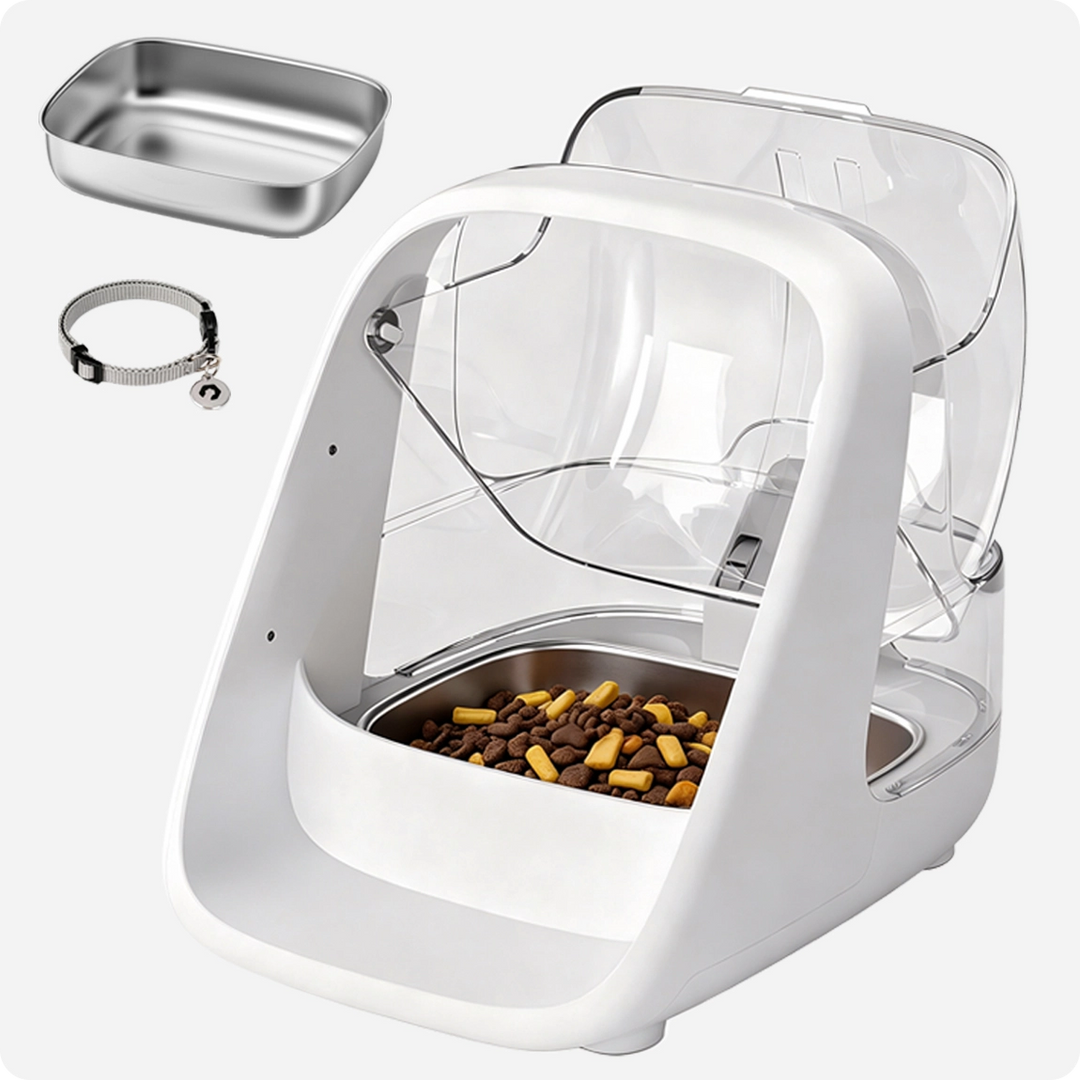
A microchip feeder recognizes a paired pet through a compatible implanted microchip or RFID collar tag. Its lid opens to give that pet access to the bowl. You still need to measure, add, and replace the food yourself.
- Timed feeder: controls when food is served.
- Microchip feeder: helps control which pet can access it.
Why a Timed Feeder Does Not Necessarily Stop Food Stealing
Imagine two cats: one finishes breakfast immediately, while the other takes a few bites and walks away. A timed feeder can deliver the right portion at 7 a.m., but the faster eater may still finish both meals.
The feeder delivered the meal correctly. The problem is who actually ate it.
Selective access addresses that different challenge. It can be helpful when pets eat different foods, a slower eater returns throughout the day, or a dog keeps approaching the cat's bowl.
The ePawDen Microchip Pet Feeder opens for a paired pet using a compatible microchip or RFID collar tag. Its design helps limit access by other pets, but no feeder should be treated as a guarantee against every determined food thief. Supervise the introduction and check that the setup works for your household.
Quick Comparison
| Your priority | Microchip feeder | Timed feeder |
|---|---|---|
| Scheduled meals | Not the core function | Core function |
| Individual pet access | Selective access | Usually unrestricted after dispensing |
| Automatic portions | Usually measured by the owner | Available on portion-dispensing models |
| Wet food | Model-dependent; ePawDen supports wet and dry food | Requires a wet-food-compatible design |
| Separate diets | Helps reserve each meal for its intended pet | May require separate feeding spaces |
| Food storage | Limited to bowl capacity | Hopper models usually hold multiple portions |
What About Wet Food?
Many hopper-style automatic feeders are built for dry kibble. Wet food needs a different design, such as a compartment feeder, and some timed models provide cooling. Do not assume every automatic feeder handles both food types.
ePawDen accommodates wet or dry food in a removable 500 ml, food-grade 304 stainless steel bowl. That makes it an option when the main challenge is keeping another pet away from a prepared meal.
A covered bowl is not a refrigerator. Follow the food manufacturer's storage and serving instructions, remove uneaten food as directed, and clean the bowl regularly. Selective access does not make wet food safe to leave out indefinitely.
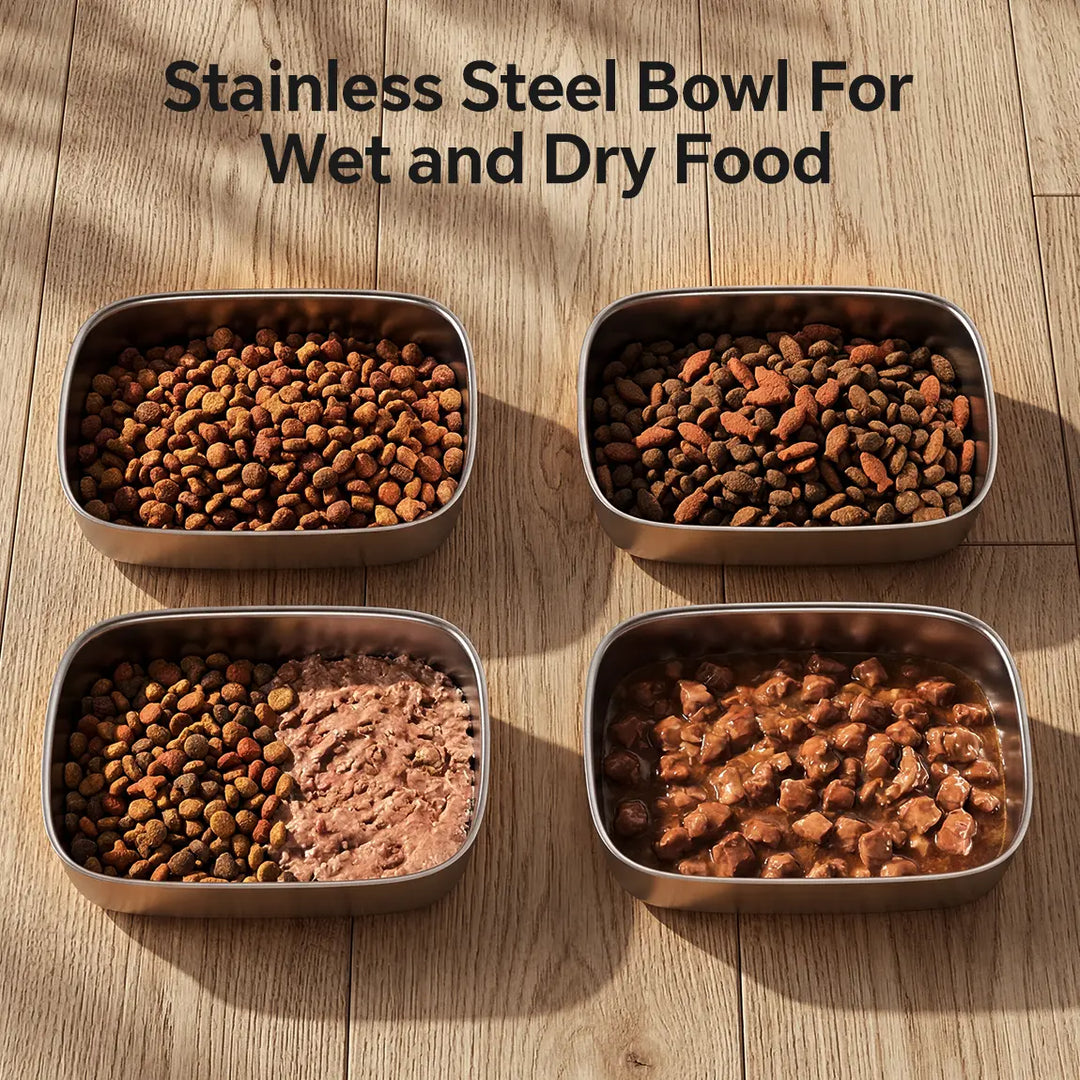
A spare bowl can be convenient while the other is being cleaned. Explore ePawDen replacement stainless steel bowls.
Which Feeder Fits Your Household?
Choose a timed feeder when scheduling is the main problem
- You want meals served at consistent times while you are away.
- You need automatic portion dispensing.
- Other pets cannot reach the bowl, or food stealing is not an issue.
- You want a larger dry-food reservoir or remote scheduling on a supported model.
Choose a microchip feeder when access is the main problem
- One pet regularly eats another pet's food.
- Your pets need separate meals or different diets.
- A slower eater needs to return to its bowl without losing the meal.
- You are happy to prepare portions yourself but want help controlling access.
For a vet-prescribed diet, a feeder is a practical access tool, not a replacement for a feeding plan. Continue to monitor what each pet actually eats.
Before Buying a Microchip Feeder
Check compatibility first. ePawDen supports compatible 15-digit ISO FDX-B implanted microchips operating at 134.2 kHz, or its RFID collar tag. Check your pet's chip type rather than assuming any implanted chip will work.
Plan the feeding location. Choose a quiet, accessible spot and leave room for your cat to approach comfortably. ePawDen's built-in rechargeable battery allows placement without continuous wall power; it still needs recharging.
Introduce the lid gradually. Follow the supplied setup instructions and give your cat time to become comfortable. Avoid forcing your cat toward a moving lid, and supervise the first meals. Adaptation time varies.
Setting Up for More Than One Cat
You do not necessarily need to replace every bowl at once. Start with the meal that needs protection, then assess whether other pets would benefit from separate selective-access stations.
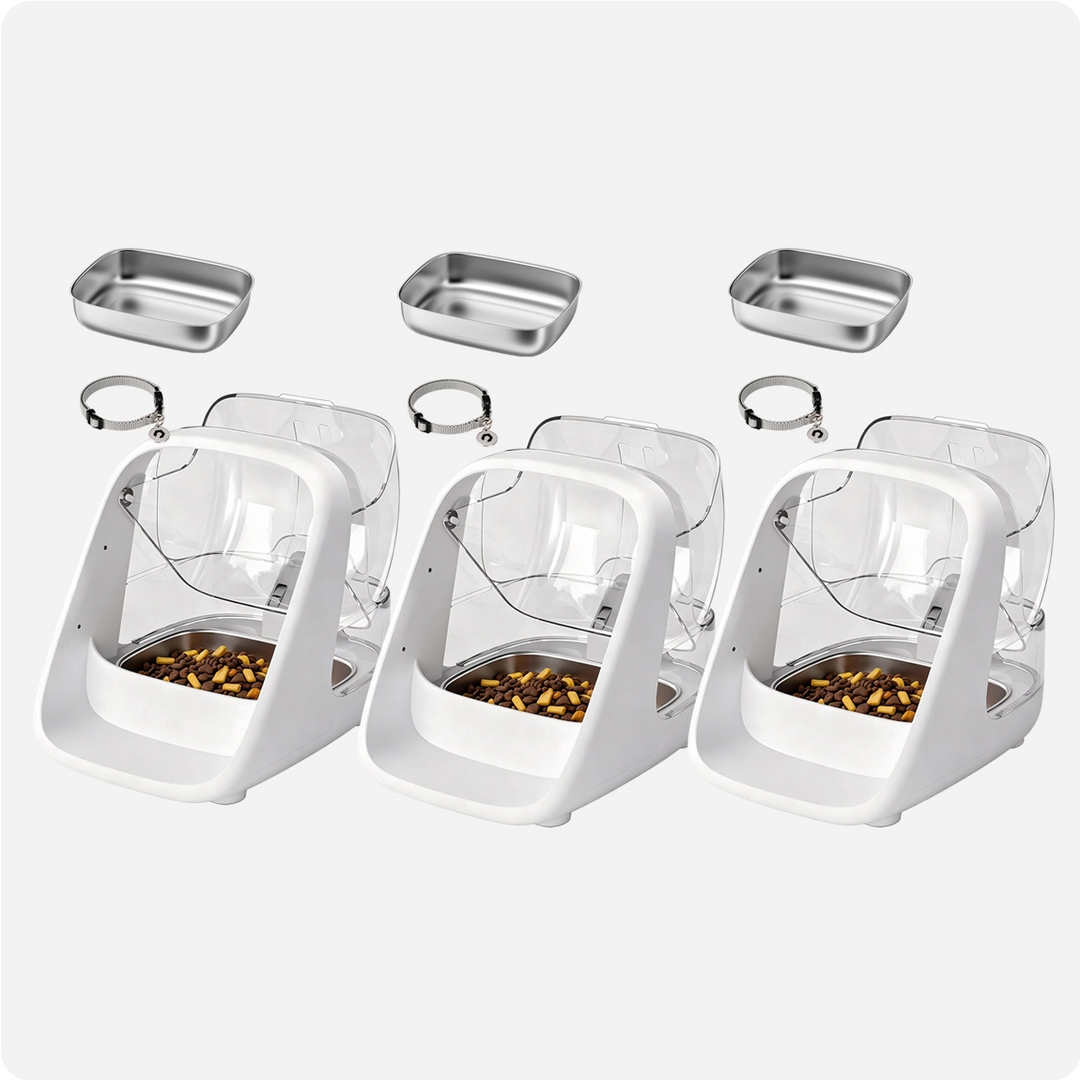
If each cat needs its own reserved meal, compare the single-feeder and multi-feeder options. Keep bowls spaced so one pet cannot block another's approach.
The Bottom Line
Choose a timed feeder to automate meal delivery. Choose a microchip feeder to help control who gets the meal. Neither is universally better: the right choice depends on the problem you need to solve.
If food stealing or separate diets are your main concern, explore ePawDen's selective-access options and check the specifications before choosing your setup.


Leave a comment